Mastering the Cardiovascular Exam: A Geeky Medics OSCE Guide
The cardiovascular system, a marvel of biological engineering, underpins virtually every bodily function. For medical students and professionals alike, a profound understanding and skillful execution of the cardiovascular (CV) exam are non-negotiable. Far more than just rote memorisation, this comprehensive assessment forms the cornerstone of diagnosing myriad heart conditions, from subtle murmurs to life-threatening arrhythmias. This guide delves into the systematic approach championed by educational platforms like Geeky Medics, offering a roadmap to mastering this critical clinical skill, particularly for success in Objective Structured Clinical Examinations (OSCEs).
The Geeky Medics Cardiovascular Exam serves as an invaluable resource, breaking down complex procedures into digestible, actionable steps. It’s designed not just to help you identify pathology but also to cultivate the precision and confidence required in real-world clinical settings. By adopting a structured methodology, you can ensure no crucial sign is missed, enhancing patient care and diagnostic accuracy.
The Indispensable Role of the Cardiovascular Exam in Modern Medicine
At its core, the cardiovascular exam is a fundamental pillar of physical diagnosis. It involves a meticulous evaluation of the heart, blood vessels, and associated structures to ascertain normal function or detect pathology. Historically, medical pioneers like Sir James Mackenzie in the 19th century laid the groundwork for the systematic approach we employ today, evolving early medical practices into a standardised, evidence-based methodology.
In contemporary practice, a thorough CV exam is paramount for detecting common and critical conditions. It’s your first line of defence against diseases such as hypertension, heart failure, coronary artery disease, and various valvular pathologies. Modern guidelines, including those from the American Heart Association, underscore the importance of a comprehensive exam, noting its potential to significantly reduce misdiagnosis rates by pinpointing subtle signs early. For students, resources like Geeky Medics transform abstract anatomical knowledge into practical clinical skills, often utilising visual aids, videos, and memorable mnemonics to simplify the learning process.
Beyond the technical steps, the exam is a powerful arena for honing crucial soft skills. It demands adept patient interaction, empathetic communication, and sharp clinical reasoning – all vital components of becoming a competent and compassionate clinician. Understanding the 'why' behind each technique helps integrate theoretical knowledge with practical application, leading to a deeper diagnostic insight rather than just a checklist mentality.
Deconstructing the Geeky Medics Cardiovascular Exam: A Systematic Approach
Success in any clinical examination, especially the high-stakes environment of an OSCE, hinges on a systematic and reproducible approach. The Geeky Medics guide excels in providing such a framework, beginning even before you lay a hand on the patient. These initial steps are often overlooked but are absolutely critical for professionalism, patient comfort, and a successful examination:
- Preparation & Introduction: Always begin by washing your hands thoroughly and donning appropriate personal protective equipment (PPE). Introduce yourself clearly, stating your name and role, then confirm the patient's name and date of birth.
- Explanation & Consent: Briefly explain what the examination will entail using patient-friendly language. This helps alleviate anxiety and ensures patient cooperation. Crucially, always gain explicit verbal consent before proceeding.
- Patient Positioning & Exposure: Adjust the head of the bed to a 45° angle. This position is optimal for observing jugular venous pulse (JVP) and facilitates the cardiac auscultation. Adequately expose the patient’s chest, offering a blanket for modesty and ensuring they understand they do not need to remove their bra if uncomfortable. Exposure of the lower legs is also helpful for assessing peripheral oedema or signs of peripheral vascular disease.
Once these preparatory steps are complete, you transition into the core examination techniques, often taught using the universally recognised IPPA framework: Inspection, Palpation, Percussion, and Auscultation.
Mastering the IPPA Framework: Inspection, Palpation, Percussion, Auscultation
Each component of the IPPA framework serves a distinct purpose, building a holistic picture of the patient's cardiovascular health:
Inspection
This is your visual assessment – observing the patient from a distance and then closer, looking for tell-tale signs. Key areas of inspection include:
- General Appearance: Look for signs of distress, pallor (anaemia), cyanosis (peripheral or central), or jaundice.
- Hands: Clubbing (chronic hypoxia), splinter haemorrhages (infective endocarditis), xanthelasma (hyperlipidaemia), tar staining (smoking).
- Arms: Blood pressure cuff marks, evidence of IV lines, radial pulse characteristics.
- Face & Neck: JVP (Jugular Venous Pressure) & JVP waveform (right-sided heart failure), carotid pulse, visible pulsations, periorbital oedema.
- Chest: Scars from previous surgery (sternotomy, pacemaker), chest wall deformities (pectus excavatum/carinatum), visible apex beat.
- Legs: Peripheral oedema (right heart failure), trophic changes (peripheral arterial disease), varicose veins.
Palpation
Palpation involves using your sense of touch to detect abnormalities.
- Pulses: Systematically palpate peripheral pulses (radial, brachial, femoral, popliteal, dorsalis pedis, posterior tibial), assessing rate, rhythm, volume, and character. Don't forget the carotid pulse, palpating one side at a time to avoid syncope.
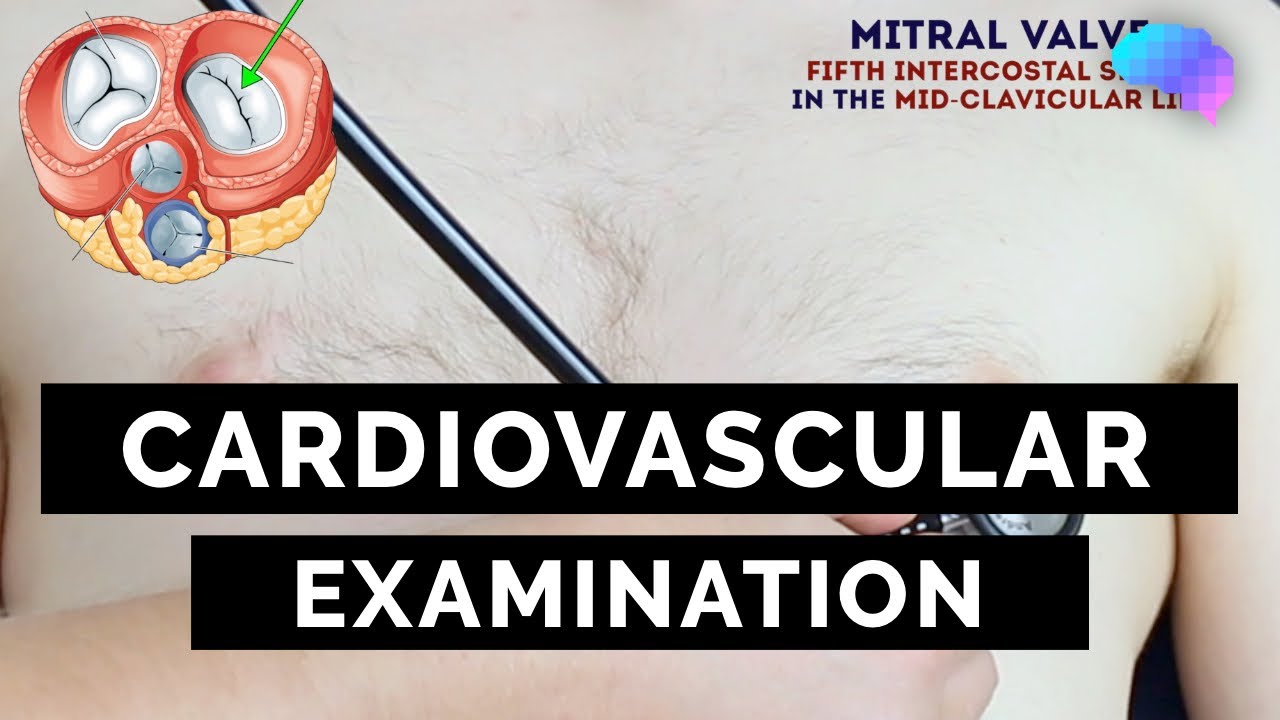
- Apex Beat (Point of Maximal Impulse - PMI): Locate the apex beat, typically in the 5th intercostal space, mid-clavicular line. Note its location, character (thrusting, tapping), and displacement (suggesting cardiomegaly).
- Heaves & Thrills: Use the heel of your hand to feel for heaves (sustained outward impulses) over the precordium (suggesting ventricular hypertrophy). Place your palm flat to feel for thrills (palpable murmurs) over the heart valves, indicating turbulent blood flow.
Percussion
While historically used to estimate heart size and borders, percussion is less commonly employed in routine cardiovascular exams today due to the widespread availability and superior accuracy of imaging techniques like echocardiography. However, understanding its rationale – assessing density changes – remains part of a comprehensive knowledge base.
Auscultation
Auscultation, performed with a stethoscope, is arguably the most crucial component, allowing you to listen to heart sounds and identify irregularities.
- Heart Sounds (S1 & S2): Listen for S1 (closure of the mitral and tricuspid valves, "lub") and S2 (closure of the aortic and pulmonary valves, "dub"). Note their intensity, splitting, and any abnormalities that might indicate valve disease. The normal heart rate typically falls between 60-100 beats per minute.
- Extra Heart Sounds: Listen for S3 (early diastole, suggests volume overload) or S4 (late diastole, suggests stiff ventricle).
- Murmurs: Listen for murmurs over the four main valve areas:
- Mitral Area: Apex (5th IC space, mid-clavicular line).
- Tricuspid Area: Left lower sternal border (4th-5th IC space).
- Aortic Area: Right 2nd intercostal space.
- Pulmonary Area: Left 2nd intercostal space.
- Other Sounds: Listen for pericardial rubs (pericarditis) or bruits over carotid arteries (stenosis).
Beyond the Basics: Clinical Reasoning and OSCE Success
The true mastery of the cardiovascular exam lies not just in executing the steps, but in synthesising your findings and engaging in robust clinical reasoning. For OSCEs, this means being able to articulate your observations, suggest potential differentials, and discuss further investigations. Platforms like Geeky Medics excel here by providing context through videos and detailed explanations, bridging the gap between isolated findings and a coherent diagnostic picture. Remember, patient interaction and clear communication throughout the exam are just as important as your technical skills.
When preparing for an OSCE, practice makes perfect. Use simulated patients, ideally with feedback, to refine your technique and build confidence. Focus on the flow of the examination, ensuring smooth transitions between each step. Being systematic and articulate will demonstrate not just your knowledge, but also your ability to perform under pressure – a critical skill in medicine. For an even deeper dive into the nuances of each technique, consult resources like IPPA & Beyond: Comprehensive Cardiovascular Exam Techniques Explained.
Conclusion
The Geeky Medics Cardiovascular Exam guide offers an indispensable framework for anyone looking to master this essential clinical skill. By embracing its systematic approach, from initial patient interaction to meticulous auscultation, you not only prepare effectively for high-stakes exams like OSCEs but also lay a strong foundation for accurate diagnosis and superior patient care. Remember, the cardiovascular exam is a dynamic process that combines scientific knowledge with the art of observation and human connection. Continuous practice and a commitment to understanding the clinical significance of each finding will transform you from a novice learner into a confident, competent clinician.